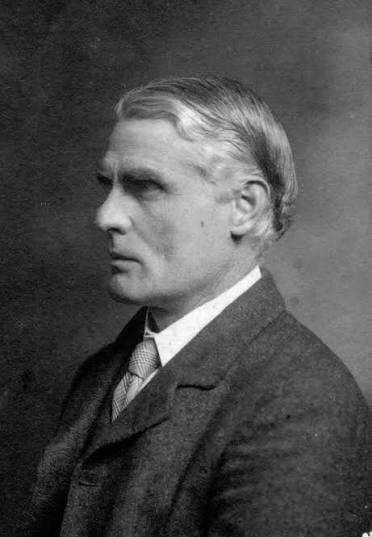
 William Herrick Macaulay (November 16, 1853 – November 28, 1936) was a prominent British mathematician, academic, and engineer.
Queer Places:
Winchester College, College St, Winchester SO23 9NA, United Kingdom
University of Cambridge, 4 Mill Ln, Cambridge CB2 1RZ
St. Leonard's Churchyard, St. Leonards Sq, Stourbridge DY9 9PN, United Kingdom
William Herrick Macaulay (November 16, 1853 – November 28, 1936) was a prominent British mathematician, academic, and engineer.
Born on November 16, 1853, in Hodnet, Shropshire, he was the son of the Rev. Samuel Herrick Macaulay and the grandson of the Rev. Aulay Macaulay. His brother, George Campbell Macaulay, was the father of the writer Dame Rose Macaulay. He never married.
Unlike his elder brother who attended Eton, Macaulay went to Winchester College. He first matriculated at Durham University, earning a B.A. and a prize fellowship in 1874. Later that year, he entered King's College, Cambridge, where he became an Abbott Scholar and graduated as the sixth Wrangler in mathematics in 1878.
Macaulay was elected a Fellow of King's College in 1879. He served as a University Lecturer in mathematics (from 1883) and a College Lecturer in applied mechanics (from 1884), playing an instrumental role in establishing Cambridge's Department of Engineering. He later served as College Bursar (from 1887), Tutor, and ultimately as Vice-Provost of King's College from 1918 until his retirement in 1924.
He is best known in engineering for proposing a systematic mechanical technique in structural analysis—commonly known as Macaulay's method—used for calculating beam and shaft deflections. He also authored works such as The Laws of Thermodynamics (1913) and contributed articles to the 1911 Encyclopædia Britannica.
Described as the last fellow at King's to maintain the traditional practice of keeping a horse and regularly riding to hounds, he died on November 28, 1936, in Clent, Worcestershire.
Macaulay was elected to the Cambridge Apostles on May 20, 1876.
While the society is historically recognized for fostering intense intellectual camaraderie and deep personal bonds among its members—many of whom went on to form the core of the Bloomsbury Group or held progressive views on social and interpersonal relations—Macaulay's own participation fit into the broader network of prominent Cambridge intellectuals of his era, keeping ties with figures like Karl Pearson and John Maynard Keynes.
Regarding explicit or contextual links to LGBTQ topics:
Historical records and standard biographical notes document that Macaulay never married.
However, there is no specific or documented information available in standard historical contexts linking William Herrick Macaulay directly to LGBTQ identities, relationships, or subcultures, despite his membership in the Cambridge Apostles—a society that, in later decades (particularly under the influence of figures like Lytton Strachey and John Maynard Keynes), became heavily associated with acceptance of homosexual relationships and homosocial intimacy.
References:
Support this project
This website is a passion project researched, developed, and funded entirely by me. If you find the content valuable and would like to help support the ongoing research and hosting costs, any contribution is deeply appreciated.
Thank you for keeping this independent resource alive!
My books on Amazon: Elisa Rolle's books